Behind The Scenes: How Erotic Models Prepare For A Shoot
When you look at a beautiful erotic photograph, you are seeing the final part of something with a lot of effort behind it. The relaxed pose, the glowing skin, the easy confidence in front of the lens are not an accident, and they are not really that spontaneous either. Behind almost every great shoot is a whole process of preparation that happens long before the camera comes out, and it is the part that people never see. Getting a good erotic or nude photo takes planning, physical preparation, mental readiness, and a real relationship between the model and the photographer. While you might know what the end product looks like in the galleries featured here on Erotic Beauties, let's discuss what it looks like behind the scenes beforehand.
The Work Starts Days Before The Shoot
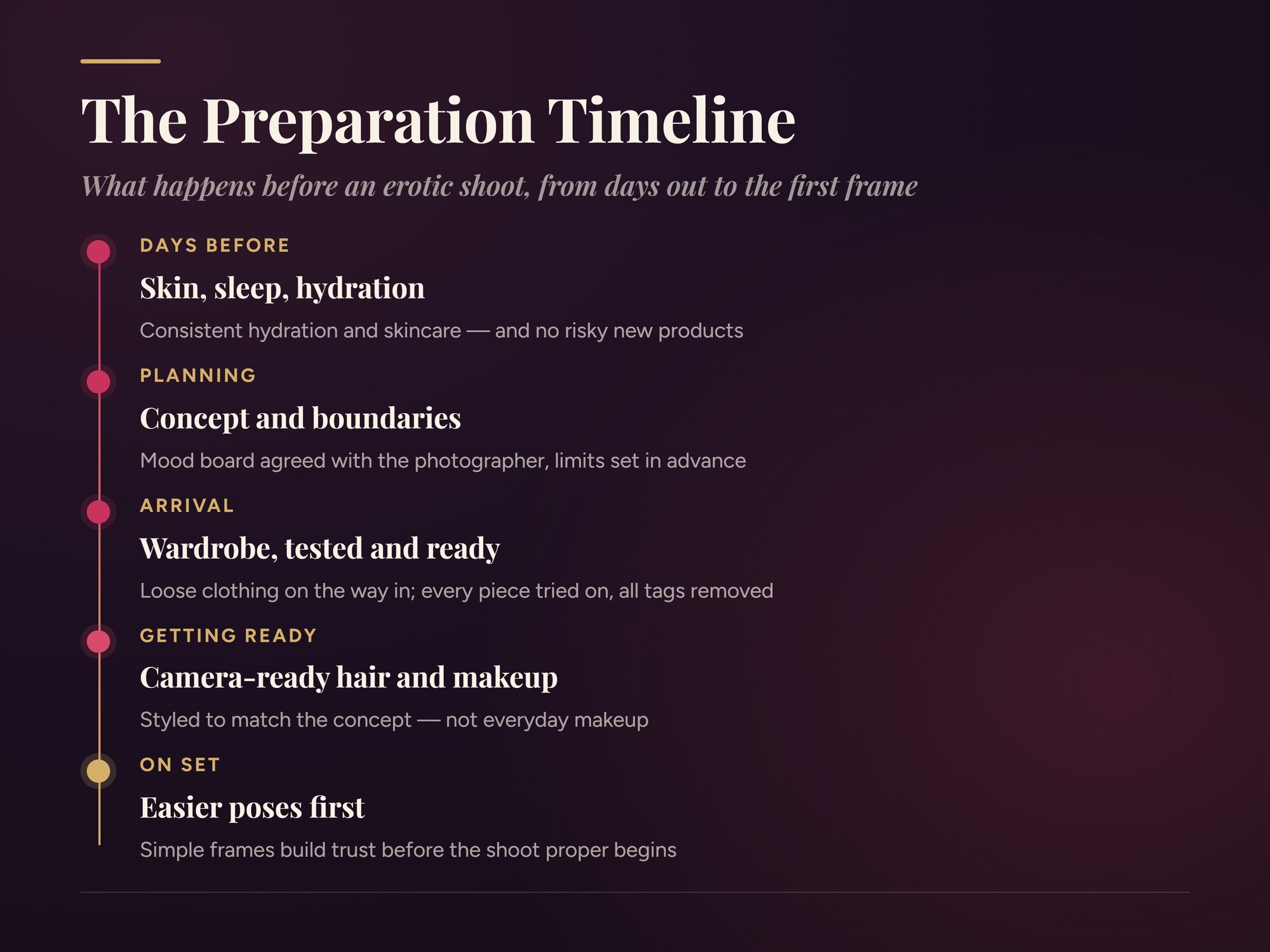
The biggest myth about erotic modeling is that the model simply turns up on the day and poses for the camera, when in reality, the preparation often begins days ahead, and the models who consistently produce great work treat their lead-up time seriously. From all the advice you might hear, the one that is most repeated by professionals across the industry is surprisingly quite simple, and that is - drink water. Staying hydrated is one of the most important things before the shoot, as it plumps the skin, softens the appearance of fine lines, and helps reduce under-eye shadows. It is definitely the closest thing to the magic tip that experienced models and photographers will name. Skin that is well hydrated simply photographs better, and no amount of lighting or retouching can replace it.
Skincare in general ramps up in the lead-up to the shoot. Models tend to focus on getting their skin as clear, smooth, and even as possible, since the camera and the studio lighting reveal far more than the naked eye. Many will avoid trying anything new and risky close to the date of the shoot. No new products, no experimental treatments, or anything that could cause a reaction or a breakout at the worst possible moment. The goal is calm, healthy, and predictable skin care that has been built over days, not minutes.
A big part of skin care is diet, and it also gets a lot of attention. With many models, easing off salty foods and alcohol in the day or two before a shoot is important, since both can leave the face looking puffy or bloated under bright light. Of course, something that is already known not only in modeling, but at any big event for any person, is to get enough rest. A good night's sleep before a shoot is pretty much a part of the job, because tiredness shows up immediately in the eyes and in the overall energy that the model brings. The most experienced models prioritize their sleep before a shoot in the same way an athlete does before a big competition, which shows just how important it is.
Planning The Look And The Mood
Preparation is not only physical, as a great deal of working a shoot is creative and logistical. This reflects in a conversation between the model and the photographer before the day itself, and it shows up through tools like the mood board, which uses a collection of reference images, colors, textures, and examples that capture the intended style and feel of the shoot. Instead of trying to describe the vision in words, a model and a photographer can assemble a visual reference that gets them aligned on what they are trying to create.
Once they share a vision, it helps them shape everything downstream more easily, as it determines the wardrobe, lighting, setting, mood, and the kind of poses that will suit the concept. A soft, romantic natural-light set calls for a completely different preparation from something that is bold and dramatic, which is why sorting this out in advance separates a smooth, productive shoot from a confused one that can go on for hours. Professionals send mood boards back and forth early, exactly because of the reasons that nobody arrives on the day with mismatched expectations.
This planning stage is also where practical questions get settled. What is the concept? What story or feeling is the shoot trying to portray? What are the model's comfort levels, and where are the boundaries? Getting all that agreed ahead of time means the actual shoot can focus on execution rather than negotiation, and that is the big part of why the preparation phase matters so much.
Wardrobe Preparation Is Its Own Skill
Wardrobe is one of the most underappreciated parts of shoot preparation, and it involves far more thought than simply picking something to wear. Experienced models bring more options than they think they will need because a piece that looks perfect on the hanger might not completely fit once it is on and lit. Even with the mood board in mind, having multiple options that allow the photographer to pick what actually works with the setting, the body language, and mood is important.
The preparation goes down to the small details, where every piece is tried on and moved in ahead of time, sitting, reaching, bending, turning, to check that nothing digs in, shifts awkwardly, or needs constant adjusting. Anything that requires fussing on set wastes time and breaks the mood.
There is also a well-known trick that has nothing to do with clothes worn during the shoot and everything to do with what is worn beforehand. Models change into loose clothing before a session, because tight waistbands, bra straps, and elastic leave marks on the skin that take up to an hour to fade, which makes turning up in tight jeans a horrible idea as it can ruin the first hour of the shoot.
Even the smallest wardrobe details get attention, where tags get removed, even sewn-in ones, because they can peek out and distract in an otherwise perfect frame. It is the kind of tiny, unglamorous detail that separates someone who takes the work seriously from someone who does not, and a lot of it happens in prep and not on camera.
Hair, Makeup, And The Camera-Ready Face
Hair and makeup are an important part of the preparation, a crucial one even. One of the recurring lessons from professionals is that camera-ready makeup is different from everyday makeup, as studio lighting has a way of washing out features, so makeup for a shoot is applied with the lens in mind. More definition, careful contouring for the camera, and details that read properly under bright light without looking overdone in person are the way to do it. This is why so many serious shoots bring in a professional makeup artist instead of leaving it to chance.
A good makeup artist does more than apply a look. They can even out and smooth the skin in a way that reduces the need for later retouching, essentially handling in person what would otherwise be fixed digitally afterward. That saves time, produces a more natural result, and lets the shoot flow without the photographer having to overthink every blemish. For the model, it is also a huge confidence boost to see a polished, camera-ready version of themselves in the mirror before they ever step in front of the camera.
When a model is preparing their own hair and makeup instead of working with an artist, the same rule applies. They should look to match the aesthetic of the shoot and enhance natural features rather than fight them. Soft hair suits a natural or romantic concept, while a sleeker, more dramatic style suits a more intense one. The point is always that the styling serves the concept that was agreed in the planning stage, instead of existing on its own.
Practicing Poses And Building Confidence
Posing looks effortless in a finished image, but for most models, this is a skill that has been practiced throughout their career, and not something that they improvise on. A lot of practice and rehearsals happen before the shoot, in front of a mirror at home, where they can see which angles, postures, and expressions suit them best.
Preparation covers the fundamentals that make posing work, such as keeping the back straight, having relaxed shoulders, and the chin slightly lifted. Learning to flow naturally from one pose to another instead of just stiffly snapping between them is another important skill, and the same goes for expressing a range of emotions along the way. Good posing relies on creating shapes and angles with the body by bending the arms and legs to form triangles and leading lines, since these stop the body from looking flat or tense and give an image real dimension.
Just as important as the physical practice is the mental side. For most models, and especially for anyone newer to modeling, posing in revealing clothes or nude in front of the camera can be a nerve-wracking experience. That nervousness shows up instantly in body language and expression. A tense, uncomfortable model produces images where she looks uncomfortable, so preparing to have a good mindset during the shoot, to get in the right headspace, build up confidence, and be relaxed enough to let the ease flow through the body is an important skill for every model. Many models say that getting into that mental state for the shoot is done best by becoming comfortable in their own skin before the shoot, and if they are, the camera will easily reflect their inner state through every photograph.
The Relationship With The Photographer
None of this preparation happens in a vacuum, because erotic photography is collaborative. The relationship between the model and the photographer is at the heart of the entire process, and preparing that relationship is as important as any of the physical preparation. Every great erotic image comes from trust and communication, not from a model following orders.
A lot of it is established before the shoot, through the conversations that set expectations, agree on the concept, and clarify comfort levels and boundaries. This groundwork means that by the time the shoot begins, both the model and the photographer already understand that they are making something together, and that they know how things are going to work. On the day of the shoot, a good photographer builds on this foundation, typically starting with the easier poses like sitting on the bed or leaning against a wall, which help the model settle and relax for the future images that are a bit more adventurous.
This is why communication is so important. A model who feels comfortable speaking up, adjusting, and collaborating will produce far better work than someone who is just following orders. The best shoots feel like a partnership working toward a shared image, and that partnership is built on preparation and trust instead of improvising on the spot.
Because of this dynamic, you will often see erotic models working with the same photographers over and over again, as they are familiar with each other, they know each other's visions, and they both know that they are going to create amazing work once again with every new shoot.
What Really Separates The Professionals
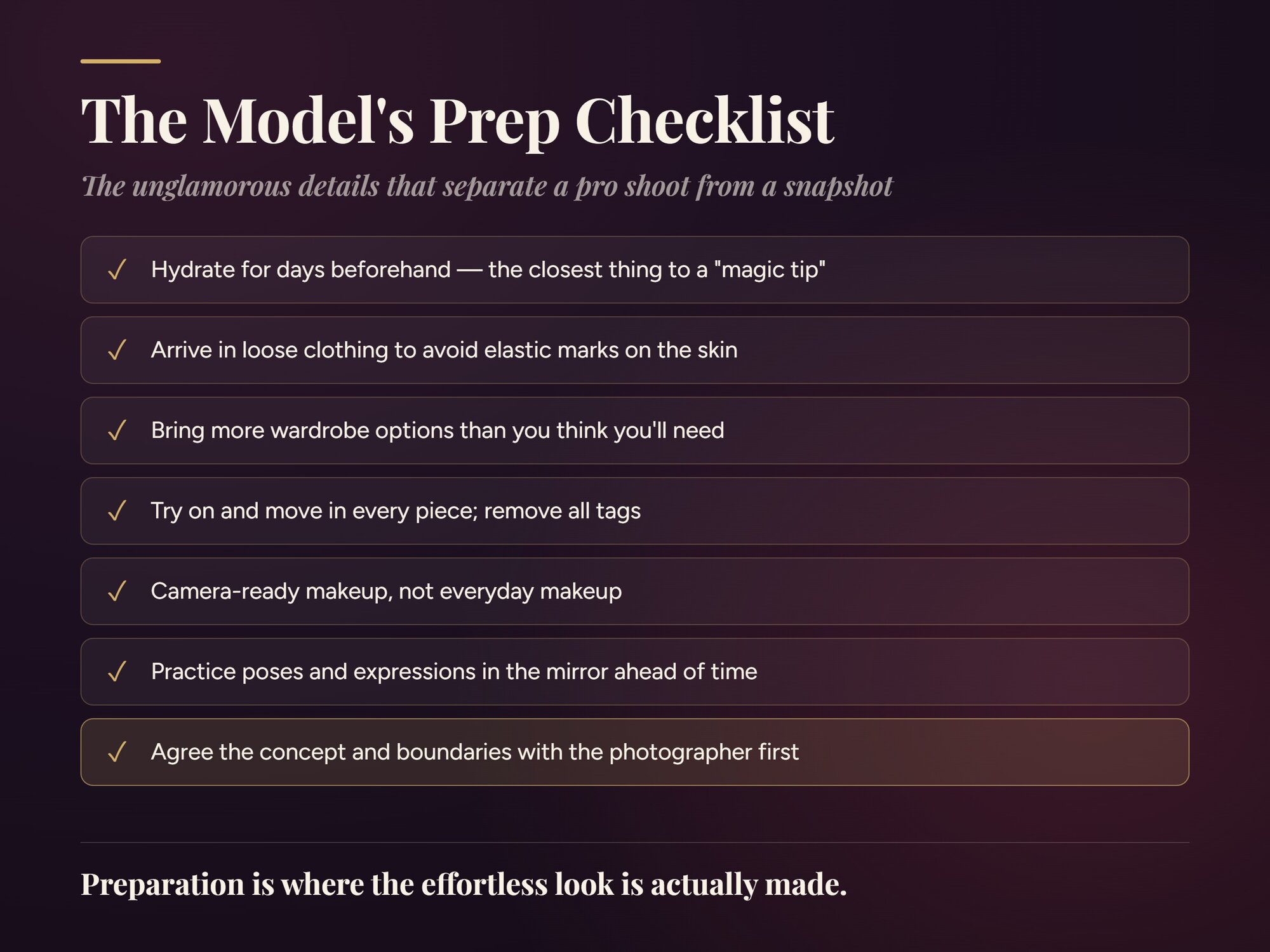
When you look at the whole process, you can see that there is a clear pattern that separates an amateur shoot from a real professional erotic one, and that preparation is often the biggest factor, along with portfolio management. Hydration, skincare, mood boards, planning, tested wardrobe, camera-ready makeup, practiced poses, and the relationship between the model and the photographer all take place before the shoot itself, and that time investment can be noticed in the final images.
Models who consistently do beautiful work do not do so because they are lucky or naturally photogenic. They do so because they put hours of hard work behind each photograph that is seen by the viewer, and they do it every time even if they know that the viewer will never see that process.


Comments (0)
Be the first to comment.